


Sneaky Garden Secrets - Bi-Colored Blooms and Color Echoes
It’s been almost twenty years since Color Echos (MacMillian, 1994) by Pamela Harper was published, but her concept of pairing plants based on mutual colors continues to influence gardeners today. I consider most of my gardens to be ‘collector gardens’, where I tuck in whatever has taken my fancy with little to no advanced planning, a technique that certainly does not guarantee a gorgeous garden. In fact, I typically need to do quite a bit of tweaking before I’m satisfied with the end result and have learned that random digging and moving is not the answer. Instead, I’ve
come to rely on Harper’s method of echoing colors within my beds, which results in a more unified garden.
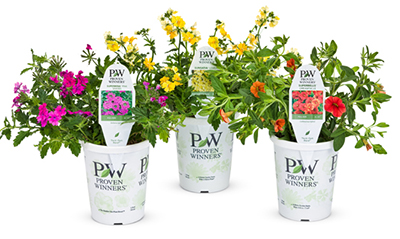
Echoing colors needn’t be complicated, but it does take a bit of thought. Take, for example, a plant like ‘Ruby Spider’ Daylily, a large-flowered, low maintenance perennial whose flowers have ruby red petals and gold throats. If you add a clump of ‘Ruby Spider‘ to your garden (and why wouldn’t you, it’s gorgeous!), you will need to find another plant that reflects its colors. Remember that your ‘echoing’ plant doesn’t need to rely on flowers, but instead may use foliage, seedpods or even fruits to repeat the hue. Perhaps you’ll pick a hardy, low growing shrub like Sunjoy® Gold Beret Barberry that forms a tidy mound of golden leaves, or maybe you’d rather an annual plant like Peter’s Gold Carpet Bidens, which produces masses of tiny sunshine yellow flowers that bloom from late spring through until frost. Also keep in mind that you don’t have to place your plants right on top of each other to get the benefits of matching colors, just make sure they’re in the same vicinity.
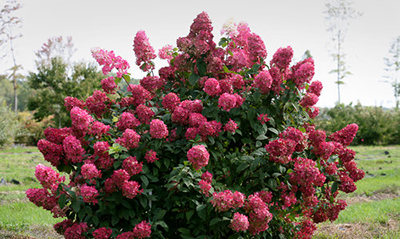
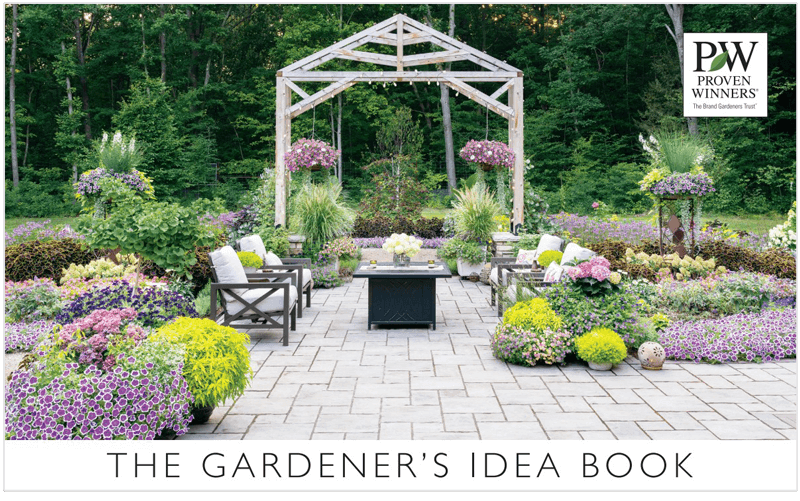
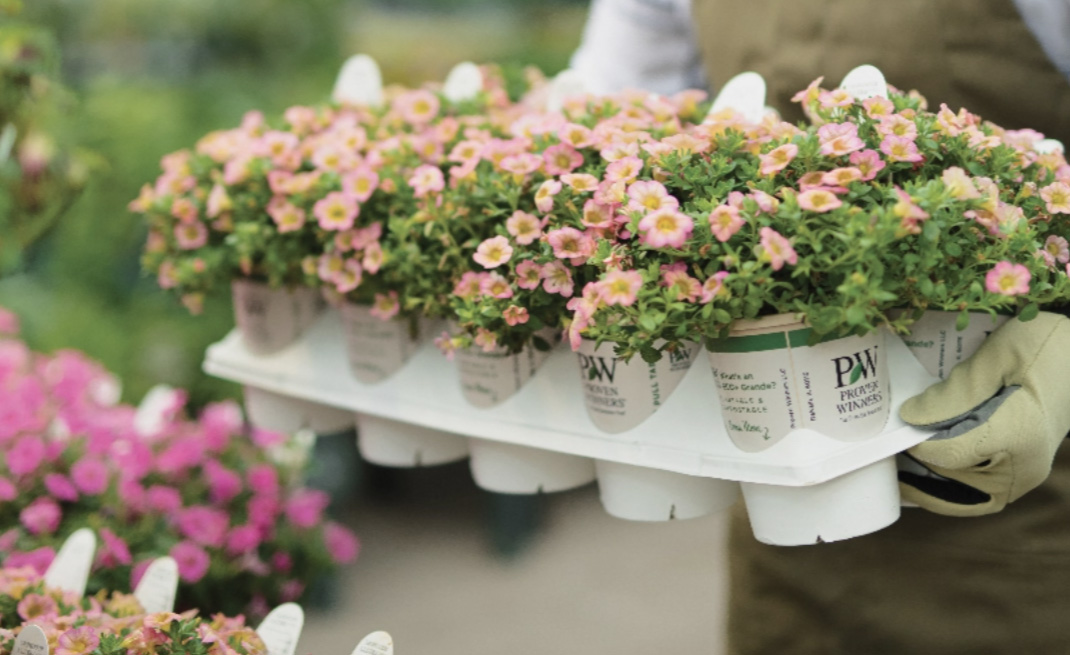
One of my favorite colors in the garden is bright pink, which can be found in varieties of perennial phlox, poppies, astilbes, asters, peonies, daylilies and oriental lilies. Planting a handful of the above perennials in your garden is an easy way to echo color, but I also really enjoy planting annuals in pots and moving them around to catch the various shades of pink as the perennials come into bloom. My top pick for this task is the super-performing Supertunia® Raspberry Blast™ Petunia. It’s a non-stop bloomer with bi-color flowers that are an eye-catching combo of soft pink and electric cherry pink. Match its bright blossoms with ‘Pardon My Pink’ Monarda, a newly introduced perennial with compact growth and bright pink flowers, or pair it with ‘Miss Molly’ Butterfly Bush, a compact shrub with fragrant hot pink flowers that also will attract butterflies and hummingbirds to your garden.
The best part of creating color echoes? It’s really fun matching plants! I have to admit that it also makes me take a closer look at my beds, resulting in a more beautiful garden.

© 2013 Proven Winners, LLC.