

Bring Them On - Part 2
Learn about which plants are brand new in the spring of 2011.
I've already covered the new flowering annuals, so this time we are focusing on foliage plants and perennials for 2011. Remember, since these plants are brand new, they are likely to be harder to find than more established plants will be. However, if you are really interested in a specific plant, it never hurts to let your favorite garden center know so they can plan on stocking up. However, plan on telling your garden center months prior to when you want the plants since it takes time to order and produce a plant. Another option is to check out on-line mail order sources, including buying directly from Proven Winners®. However, the best option will always be to buy locally, if you can.
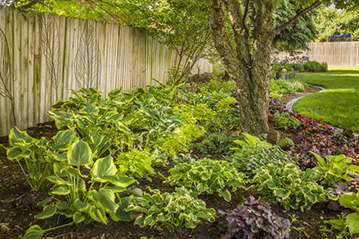
Foliage plants can be every bit as interesting and useful in your landscape as flowering plants are. They don't necessarily jump to mind when we first think of planting our flower beds, but they are an integral part of a great garden. Foliage plants are a great design element. Some great new foliage plants to consider include ColorBlaze® Alligator Tears™ coleus (Solenostemon). This compact, well-branched plant is tidy and very late to bloom, if it blooms at all. Late blooming is important with coleus because the foliage looks better when the plants aren't blooming. To help keep coleus foliage looking its best, pinch off the flowers as they appear. The green and yellow foliage is a perfect accent to any color scheme and the plants work equally well in landscapes and containers. ColorBlaze® Alligator Tears™ is heat and sun tolerant, although in southern climates with extremely hot summers some afternoon shade can help the plants look their best.
We also have introduced two new grasses for spring 2011. The first is Graceful Grasses® Blue Mohawk™ Juncus (soft rush). This grass is hardy to zone 5, so it will be perennial in much of the U.S. and Canada. It features blue-toned foliage that is stiffly upright and spiky. It works well in containers and landscapes and will thrive in both normal soil moisture and wet soils. In fact, it prefers to be on the moist side so do not allow it to become too dry. I treated it as an annual and used it as the centerpiece in a combination planter, another great way to use it. Graceful Grasses® Blue Mohawk™ does best when planted in full sun.
The other new grass introduction is Graceful Grasses® Vertigo™ Pennisetum (purple fountain grass). This massive (3 to 6 feet tall) annual grass is a great, new addition to the garden. It is tall, with burgundy to black foliage that is nicely upright. However, despite its upright nature it has enough flexibility to provide nice movement in the landscape and is a great accent plant in mixed beds. The foliage is darkest when the plant is grown in full sun and will show dark green foliage if placed in a location with too much shade. It is also good in very large combination planters, however, if it isn't paired with other vigorous plants you will soon have a container with only Graceful Grasses® Vertigo™. This is one reason why growing it in a container by itself may be a safer bet. It doesn't bloom, except maybe in some parts of the Deep South. It starts slowly in spring, but takes off when the days heat up. I think the extra money you pay to buy this grass in a gallon pot versus a four-inch pot is well worth it. The plant will get a much faster start in your flower garden, which means it will be large enough to have real impact in your garden more quickly. It may appear to grow horizontally when young, but don't be fooled, it will soon turn upright and rapidly become tall. I had this in my garden last year and it was one of the most asked about plants.
The Sweet Caroline line of Ipomoea (sweet potato vine) is also a great addition to the Proven Winners® line. They have been considered the premier line of sweet potato vines for several years. Sweet Carolines come in three different leaf types. 'Sweet Caroline Bewitched Purple' is unique to sweet potato vines. The plants have broad foliage with serrated edges and a more compact bushy habit, versus the trailing habit of most sweet potato vines. Leaves are purple in full sun, but will be dark green in shady conditions. The second leaf type is palmate. This simply means that the leaves look a bit like the fingers on a hand. This type of foliage is considered typical for sweet potato vines. 'Sweet Caroline Bronze,' 'Sweet Caroline Green Yellow,' 'Sweet Caroline Light Green,' 'Sweet Caroline Purple' and 'Sweet Caroline Red' all have palmate foliage. The third leaf type is heart shaped. 'Sweet Caroline Sweetheart Light Green,' 'Sweet Caroline Sweetheart Purple' and 'Sweet Caroline Sweetheart Red' all have heart shaped foliage.
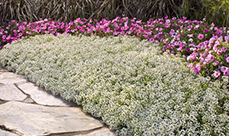
All of these plants, except 'Sweet Caroline Bewitched Purple,' are spreading plants. The Sweet Carolines make great annual groundcovers or combination container component plants. They prefer full sun, but will do fine with partial shade. They are heat lovers and will perform well through the summer. While not as aggressive as older varieties of sweet potato vines, they are still vigorous plants and should be paired with other vigorous varieties in combination planters or the sweet potato vines will dominate the containers. Supertunia® Petunia, Superbena® Verbena and Snow Princess® Lobularia are three plants that will keep pace with Sweet Caroline in combination planters.
We are also introducing several new perennials this year. First up are the two Madly™ Aubrieta. Madly™ Magenta and Madly™ Blue Violet are both early spring bloomers that create color when few other plants are blooming. They are hardy to zone 3 and prefer full sun. They are cushion-type plants, topping out at no more than 6 inches tall and spreading around 10 inches. Most Aubrieta bloom only in spring, but these breakthroughs will rebloom in fall. They are both great additions for early spring color in the garden.
The true breakthrough in our perennial introductions this year is Absolutely Amethyst™ Iberis. Absolutely Amethyst™ is the first non-white, perennial Iberis and it is a beautiful amethyst color. She is hardy to zone 4, grows to about a foot tall and blooms later than other perennial Iberis. Perennial Iberis usually bloom in early spring. Absolutely Amethyst™ blooms in late April and May. She prefers to be planted in full sun and would be a great addition to your spring perennial garden.
The last, but certainly not least, new introduction is Daisy May™ Leucanthemum (Shasta daisy). Daisy May™ is 1 to 2 feet tall, really well-branched and blooms for a longer period of time without deadheading than most Leucanthemum. The branching structure of this plant leads to 3 times the number of buds per stem versus old fashioned Leucanthemum. In other words, 3 times the bang for your buck. She is hardy to zone 5 and prefers full sun conditions.
Now that you've gotten a preview of some of our new plants, it's time to start choosing which ones you'll be planting next spring. We've got some great new plants that deserve a chance to show off in your flower garden!
'Sweet Caroline Bronze' Ipomoea batatas USPP15,437, Can. 2973; 'Sweet Caroline Bewitched Purple' Ipomoea batatas USPP18,574, Can. 2900; 'Sweet Caroline Green Yellow' Ipomoea batatas USPP18,673, Can. 2903; 'Sweet Caroline Light Green' Ipomoea batatas USPP15,028, Can. 2975; 'Sweet Caroline Purple' Ipomoea batatas USPP14,912, Can. 2974; 'Sweet Caroline Red' Ipomoea batatas USPP17,483, Can. 2976; 'Sweet Caroline Sweetheart Light Green' Ipomoea batatas USPP18,572, Can. 2901; 'Sweet Caroline Sweetheart Purple' Ipomoea batatas USPP18,573, Can. 2902; 'Sweet Caroline Sweetheart Red' Ipomoea batatas USPP19,013, Can. 2904; Snow Princess® Lobularia hybrid 'Inlbusnopr' USPPAF, CPBRAF; Madly™ Magenta Aubrieta hybrid 'Auberne' USPPAF, CPBRAF; Absolutely Amethyst™ Iberis hybrid 'IB2401' USPPAF, CPBRAF; Daisy May™ Leucanthemum 'Daisy Duke' USPPAF, CPBRAF;

Be the first to comment!
Post new comment