



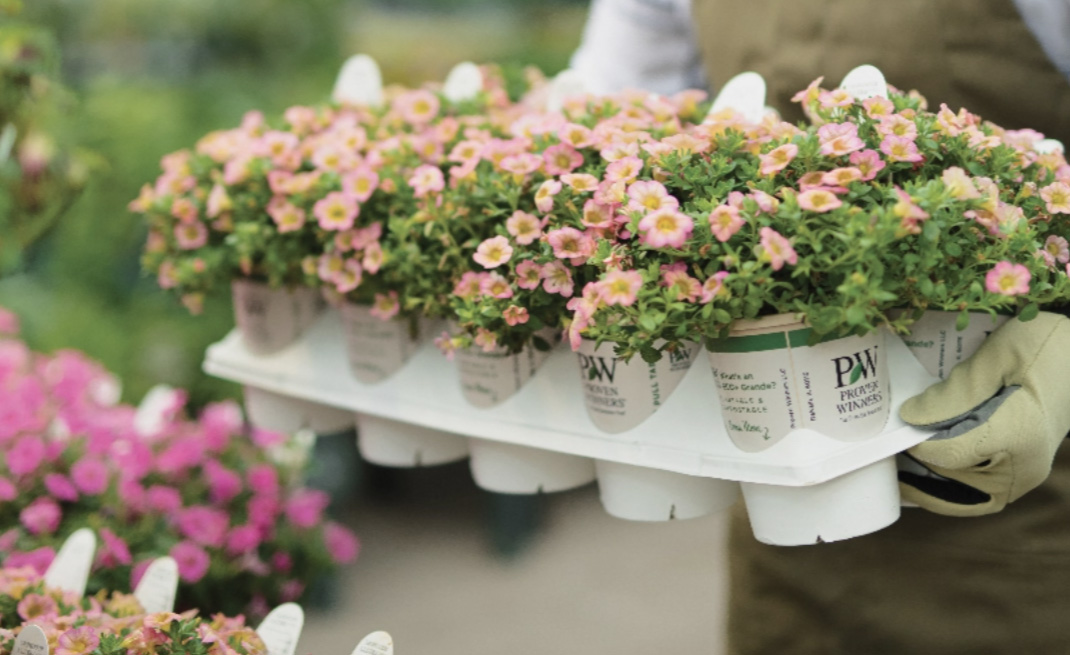


How to Deadhead Flowers for Longer Bloom
When and how to deadhead is a common question for gardeners.
 The phrase Deadhead has a whole different meaning for those of us who are gardeners, rather than the general public out there. If you google either Dead Head or deadhead the search results will return information on fans of the Grateful Dead not the act of removing spent blooms from plants. It takes typing in ‘Gardening Deadhead’ to get results that will be helpful in learning more about keeping plants in bloom.
I am often the person who answers questions sent in by gardeners and recently one of the most common questions has been when and how to deadhead specific plants. In this article I will give a brief summary of why deadheading plants is sometimes necessary, how you should deadhead and which Proven Winners® plants need deadheading.
WHAT IS DEADHEADING?
First, what exactly is deadheading? This gardening term simply means to remove the old spent blooms including any developing seed from a plant to help keep it blooming longer.
 Your next question is likely to be “Why does a plant bloom more if you remove old flowers?”. In the grand scheme of things flowers are meant to ensure survival of the species. All of the various blooms that nature developed (not plant breeders) are an attempt to ensure that seeds are produced and the next generation of plants develops. In some cases, once seed has been produced, thus ensuring the survival of the species, the plant will stop blooming since there is no reason to put energy into blooming any longer.
It was probably a gardener that figured out removing old flowers before they produce seed will keep plants blooming longer. This can be a rather time consuming endeavor, but many times is considered a labor of love. In more recent times, plant breeders have put a lot of effort into increasing the blooming time of plants. Someone then realized that sterile plants, those that do not produce seed, will bloom continuously even when you don’t deadhead. These plants keep on trying, unsuccessfully, to produce seed so they keep producing flowers. Rather frustrating for the plant, but easy for the gardener.
 As time has gone on, plant breeders have put a lot of effort into choosing plants that will continue to bloom without deadheading, reducing the worry about when to deadhead. Sometimes this is because the flowers are sterile and sometimes it is simply because it is possible to choose plants who are prolific bloomers despite setting seed. Proven Winners® tries to select plants that are prolific bloomers, but still are “low maintenance,” which generally means that they don’t need to be deadheaded. Another part of “low-maintenance” refers to the fact that many of our plants are “self-cleaning”. This simply means that wind or other factors will cause the flowers to either blow off the plant or simply melt away leaving no old flower to remove. Now if only my car was self-cleaning!
Choosing self-cleaning or plants that don’t need deadheading would certainly be the easiest route to continuous flowers. However, in some cases there will be a plant you can’t do without, even though deadheading plants is required, highlighting the importance of how to deadhead, or perhaps the sight of old blooms still hanging on to plants will be unsightly enough that you want to remove them anyway. In these cases knowing how to properly deadhead will be necessary.
What is the difference between deadheading and pruning?
Deadheading and pruning are often confused, but they serve different purposes in the garden. Deadheading is the simple act of removing faded flowers to encourage more blooms. It's a quick task you can do with pruning snips as you walk through your garden. Pruning, on the other hand, involves more extensive trimming to shape the plant and promote overall health.

HOW TO REMOVE OLD OR SPENT FLOWER BLOSSOMS
In most cases, when deadheading, you can simply remove the old flower by pinching off the stem just below the base of the flower. This will remove the old flower and keep it from producing seed – the goal of deadheading. If the flower stem is large or you don’t want to stain your fingernails green, you may find using pruning shears or scissors to be a better choice. Please note that simply pulling off the dead flower petals without removing the developing seed pod does not increase flower production since seeds will still develop.
Any flower can be removed just above the first leaf below the flower head without affecting the rest of the plant. For plants with larger stems removing just the flower may leave an ugly stem exposed. Cutting just above the first leaf will remove the unsightly stem as well as the flower. This is also the preferred method of deadheading for plants that bloom with spikes of flowers. New research has recently shown that even roses flower more prolifically when old flowers are removed just above the first leaf below the flower rather than at the first set of 5 leaves (this is the standard method promoted by most people).
On short stemmed flowers (like Calibrachoa, Petunia, Lobelia), just trim off old blooms or seed pods and remove any stems where there are no flowers forming.
On long stemmed flowers (like Gerbera Daisy, Heuchera, Shasta Daisy) remove each flower stalk as low to the ground as possible without damaging surrounding leaves.
WHEN TO DEADHEAD FLOWERS?
Deadheading should be done in spring to early summer, waiting until late summer or fall to begin deadheading plants is usually too late and the shortening days of fall and cooler temperatures will work against the growth of new flowers.
WHICH FLOWERS DON'T NEED DEADHEADING TO BLOOM CONTINUOUSLY?
For many gardeners, deadheading is a time consuming chore they simply don’t have the time to perform. Some newer varieties of plants that used to have to be deadheaded, for instance Supertunia® petunias, are tailor made for these time-starved gardeners. However, there are gardeners that find deadheading to be a great excuse to spend time in the garden, a time honored tradition, a way to relax at the end of a busy day or even a Zen-like activity. If you are a gardener who enjoys deadheading flowers, never fear. Even though the plants may no longer need deadheading to bloom continuously, doing so will not harm the plants. Feel free to remove as many spent flowers as you wish.
Related: Four Tips to Keep Your Petunias Blooming
 While a general rule is always nice to have, a list of how to deadhead specific plants is also useful. Below is a quick rundown of our Proven Winners plants and some notes on deadheading.
Plants that are self-cleaning
- Angelonia Angelface®
- Begonia Surefire®
- Browallia Endless™
- Calibrachoa Superbells®
- Cuphea
- Euphorbia Hybrid The Diamonds
- Evolvulus Blue My Mind®
- Gomphrena Truffula™ Pink
- Impatiens Rockapulco®
- Isotoma
- Lamium Chablis
- Lantana Luscious®
- Lobelia Laguna®
- Lobularia
- Mecardonia GoldDust™
- Nemesia
- Oxalis Charmed®
- Phlox Intensia® (this may not be true of all phlox)
- Portulaca Mojave®
- Salvia Rockin'®
- Scaevola Whirlwind®
- Sutera Snowstorm®
- Thunbergia A-Peel®
- Torenia Catalina® and Summer Wave®
- Verbena Superbena®
Plants that bury their dead
This simply means the new flowers will quickly cover the old ones, so no deadheading is necessary.
- Ageratum Artist® - This is not necessarily true of other series of Ageratum.
- Osteospermum Bright Lights®
- Sanvitalia Sunbini®
Plants that don't need deadheading, but you can to improve appearance
 Canna Toucan® - Watch for pod development. If seed pods develop, remove them. If they don't, deadheading isn't necessary. Remove spent flowers, being careful not to remove buds which will be close to the flower stalks.
Chrysocephalum Flambe® Yellow - Generally a self-cleaning plant, although occasional cleaning may improve appearance. No deadheading needed for continued bloom.
Cleome The Rosalitas - The plants are seed sterile, self-cleaning, deadheading isn’t necessary.
Dahlia Mystic Illusion - Deadheading isn't needed, although removal of spent flowers and their stems can help tidy the plants.
Gaura - Each flowering stem adds blooms, continuously to the end of the spike. As time goes on the flowering stems can get rather long and tangled. Although deadheading flowers isn’t necessary for continued blooming you may find that you prefer to trim back some of the flowering stems at some point in mid-summer. This will encourage new flowering stems to emerge. Flowers will be closer to the foliage and the plant will look tidier. If you choose, you can trim all the flower stems off at once, however, you should then expect a 2 to 3 week period without flowers.
Heuchera - They begin blooming in early spring. Deadheading won’t keep them blooming longer. However, removing the flower stems once the plant has finished blooming will keep them looking tidier.
Hypoestes Hippo® - They are grown for their foliage. If flowers do appear, removing flowers and trimming the plants back should improve their appearance.

Pelargonium Boldly® - Deadheading will improve appearance, although it isn't strictly necessary for all season flowering.
Petunia Supertunia® – self-cleaning plant, no deadheading necessary, this is not necessarily true of all Petunias. You may want to remove old blooms of Supertunia® doubles since these larger flowers sometimes remain on the plant. Leaving them will not affect flowering.
Perennial Sedum – the seed heads will remain this summer to fall blooming plants. Removing them will not keep the plant blooming longer. Many people consider the seed heads to be attractive and will allow them to remain on the plant throughout the winter before removing them as part of their garden spring cleaning.
Solenostemon Coleus ColorBlaze® - Coleus are grown for foliage, our plants are selected to bloom late in the season because blooming usually signals a decrease in foliage quality. Removal of flower spikes, if they occur, will help keep the foliage looking good.
PLANTS YOU SHOULD DEADHEAD
These plants respond well to deadheading and it can extend their flowering season:
- Amazing Daisies™ Leucanthemum
- Butterfly and other Argyranthemum
- Fruit Punch® Dianthus
- Goldilocks Rocks® Bidens
- Tuscan Sun Heliopsis
- Rainbow Rhythm™ Daylily
Buy Proven Winners plants: