



Proven Winners® Eco+ Containers FAQ
A More Sustainable Container Option
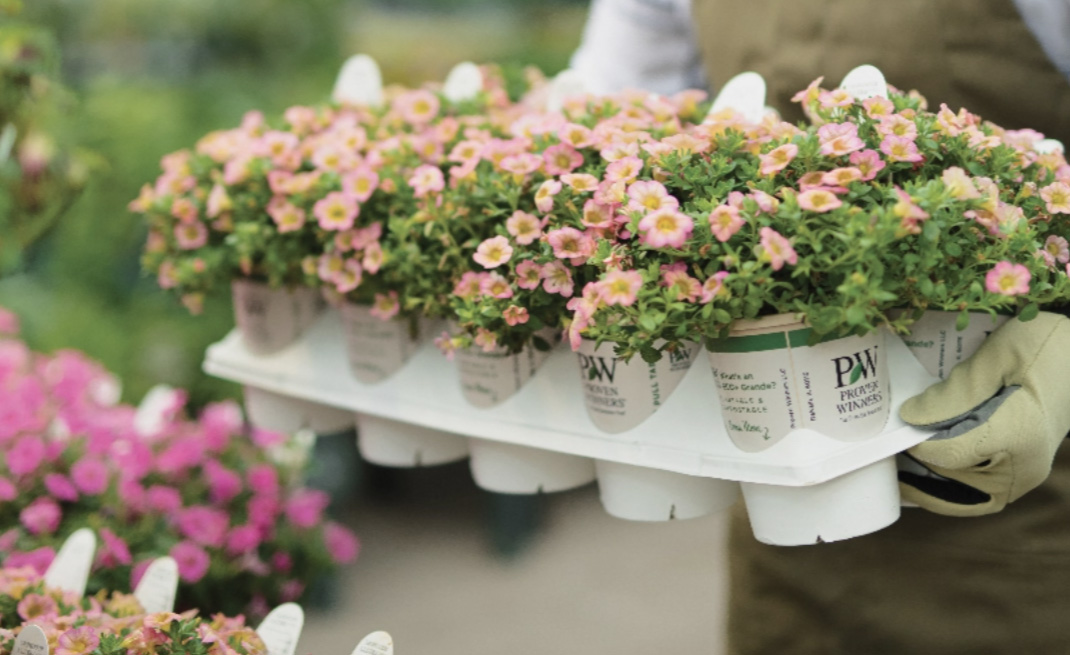
The Proven Winners® Eco+ Grande® and Eco+ Elite™ Containers are an industrial compostable (ASTM D6400) garden pot, made out of all-natural ingredients that form PLA (polylactic acid). PLA is made from sugars derived from corn and sugar beet plant parts (not what is eaten) grown right here in the U.S. Starch from these sugars is processed into a biopolymer that looks, acts and performs like traditional plastic, but is much better for the environment.


Dispose of Eco+ Containers by Throwing Them Away
Eco+ containers will break down in the landfill hundreds of years faster than plastic containers because they're made of 100% natural materials.
Can Eco+ Containers go into my local industrial composting bin?
If your area supports industrial composting you can put it in your curbside compost bin that gets picked up for industrial composting. This process is where the industrial composter takes and manages all the organics from plant-based plastics, food waste, yard waste, etc., and puts them into windrows. These windrows get to 160 degrees and help break everything down into usable compost. Proven Winners Eco+ Grande and Eco Elite containers have been tested by a 3rd party and certified for industrial composting, achieving ASTM D6400 standards.
Remember, these plant-based PLA products continue to get smaller and smaller until microbes consume them and turn them back into inert organic products.
How are the new containers different from the previous versions? The new Proven Winners Eco+ Containers fill the void of the traditional petroleum pot for their robustness and durability. The original formulation was built to breakdown in the ground after planting, but there were hurdles in shipping, packaging and handling. Also, due to the vast range of climates where Proven Winners pots are being sold and planted, the variations of soil, moisture and temperatures create variations in the timing of the Eco+ pots breaking down. This formulation will be better for shipping, packaging and overall durability.
Are the nutrients still present? No, the nutrients were removed for this formulation. We are working towards new options for the future that will allow us to check more boxes.
Has the composition changed? The material properties have changes, but not the sustainability end of life qualities of being industrial compostable.
Why are they no longer plant-able? We don't recommend these new containers be planted since they no longer contain the nutrients that were a main factor in breaking down the pots faster. Without these nutrients, it will take too long for the pot to breakdown in the soil.
What sizes will be available? Eco+ Grande® and the Eco+ Elite™
How long do Eco+ Containers last above ground with plant/soil in them? Eco+ Containers begin to break down with a combination of heat and moisture so it’s advisable to plant them as soon as you’re able to allow your plants to flourish.
How is plastic made from plants?
Instead of drilling for oil to make plastics, scientists have found a way to break down plants into natural sugars which then can be used to produce a new breed of Earth-friendly plastics called PLA (polylactic acid).
Where are Eco+ Containers actually made?
Eco+ Containers are proudly designed, manufactured and assembled responsibly in Stillwater, Minnesota.
What is the shelf life of Eco+ Container if they are empty not being used?
If you keep them out of the heat, direct sunlight and moisture, we would estimate a few years. Heat and moisture are the cause of the Eco+ pots breaking down.
What happens if I throw my Eco+ Container into the landfill?
Don't worry! Eco+ Containers will break down faster in the landfill than the traditional petroleum garden pots
I noticed some Eco+ Containers are lighter in color than others. Is this okay?
Yes, not a problem at all. Since Eco+ Containers are made from natural materials, there are sometimes variances in the coloration of the PLA material. This will not impact the performance of the Eco+ Containers, nor deter plants from growing properly.
Will the corn in the pots effect ones allergies?
Triggers of allergic responses are antigens, often proteins, which can be found in air, food and water. In the case of corn allergens, profilin, a protein, has been identified in corn and in many other plant (food) extracts. When food is heated past the heat-labile point, its chemical configuration changes. Due to the extreme heat and numerous processing steps to convert corn into the material that is used to make Eco+ Container , it would not contain immunologically reactive profilin and therefore no concerns regarding allergic reactions.
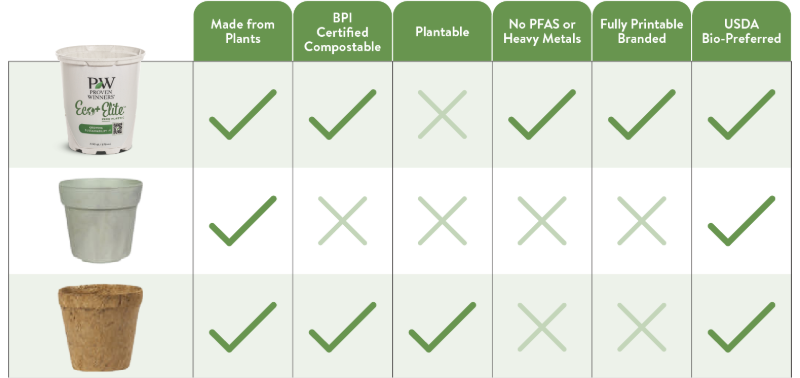
*The Proven Winners® Eco+ Containers are an industrial compostable (ASTM D6400) garden pot.
Growers and Grower Retailers - Learn more about growing with our Eco+ containers